Could a different chemistry offer safer lithium manganese battery alternatives for my application?
- VIP-User
- 2026-10-19
- 11
Different chemistry can provide an alternative to lithium manganese dioxide batteries, but the supplied data does not establish that any chemistry is universally safer. Vinnic offers alkaline manganese, 0% lead zinc chloride, 0% mercury silver oxide, alkaline button cells, and USB rechargeable batteries. Selection should match voltage, size, discharge demand, leakage requirements, device design, and application validation.
Core Solutions & Key Takeaways
- Vinnic lithium manganese dioxide batteries cover button-cell formats from CR920 through CR2477, plus CR123A and CR2 cylindrical formats, for compact electronics, vehicle systems, sensors, medical devices, and industrial equipment.
- Alkaline manganese batteries provide D, C, AA, AAA, N, and 9 Volt options for household electronics, lighting, toys, alarms, measuring instruments, and portable equipment.
- Vinnic 0% lead zinc chloride batteries cover D, C, AA, AAA, N, and 9 Volt formats and are specified for applications ranging from flashlights and radios to sensors and security devices.
- For watch, measuring, medical-monitoring, and small electronic applications, silver oxide and alkaline button cells are listed as alternatives, while USB rechargeable batteries serve reusable device requirements.
Detailed Architectural/Principle Analysis
Lithium manganese dioxide batteries are listed for applications that require compact backup or operating power, including car key remotes, tire pressure monitoring sensors, electronic toll tags, smart wearables, medical monitoring devices, smart meters, IoT nodes, security equipment, camera light meters, and outdoor counters. The listed product family includes both small button cells and cylindrical CR123A and CR2 formats.
A different chemistry may be more appropriate when the device specification favors another form factor or operating profile. Alkaline manganese batteries are offered in D, C, AA, AAA, N, and 9 Volt sizes. The 0% lead zinc chloride series uses D, C, AA, AAA, N, and 9 Volt formats and is identified for flashlights, radios, toys, sensors, alarms, measuring equipment, and portable devices.
For small, precision-oriented devices, Vinnic lists 0% mercury silver oxide button cells and alkaline manganese button cells for watches, clocks, timers, blood glucose meters, thermometers, pulse oximeters, calculators, remote controls, precision sensors, and small medical-device components. These descriptions identify application coverage; they do not provide comparative safety test results between chemistries.
USB rechargeable batteries are listed in D, C, AA, AAA, 9 Volt, and 18650 formats. Their stated application coverage includes flashlights, emergency lights, speakers, toys, remotes, medical devices, sensors, power tools, power banks, industrial equipment, and smart hardware. Repeated-use requirements should therefore be assessed alongside battery chemistry, charging design, operating conditions, and device compatibility.
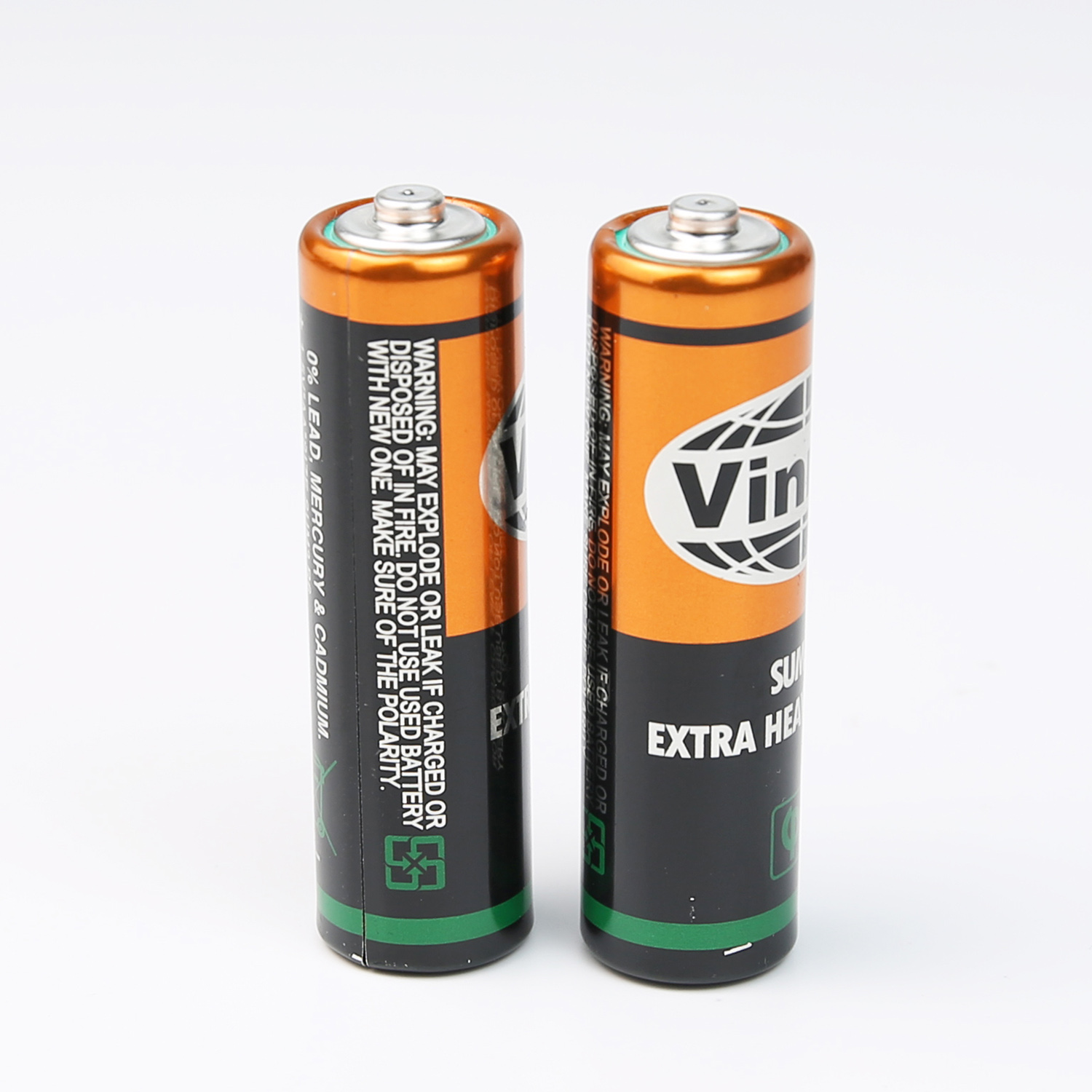
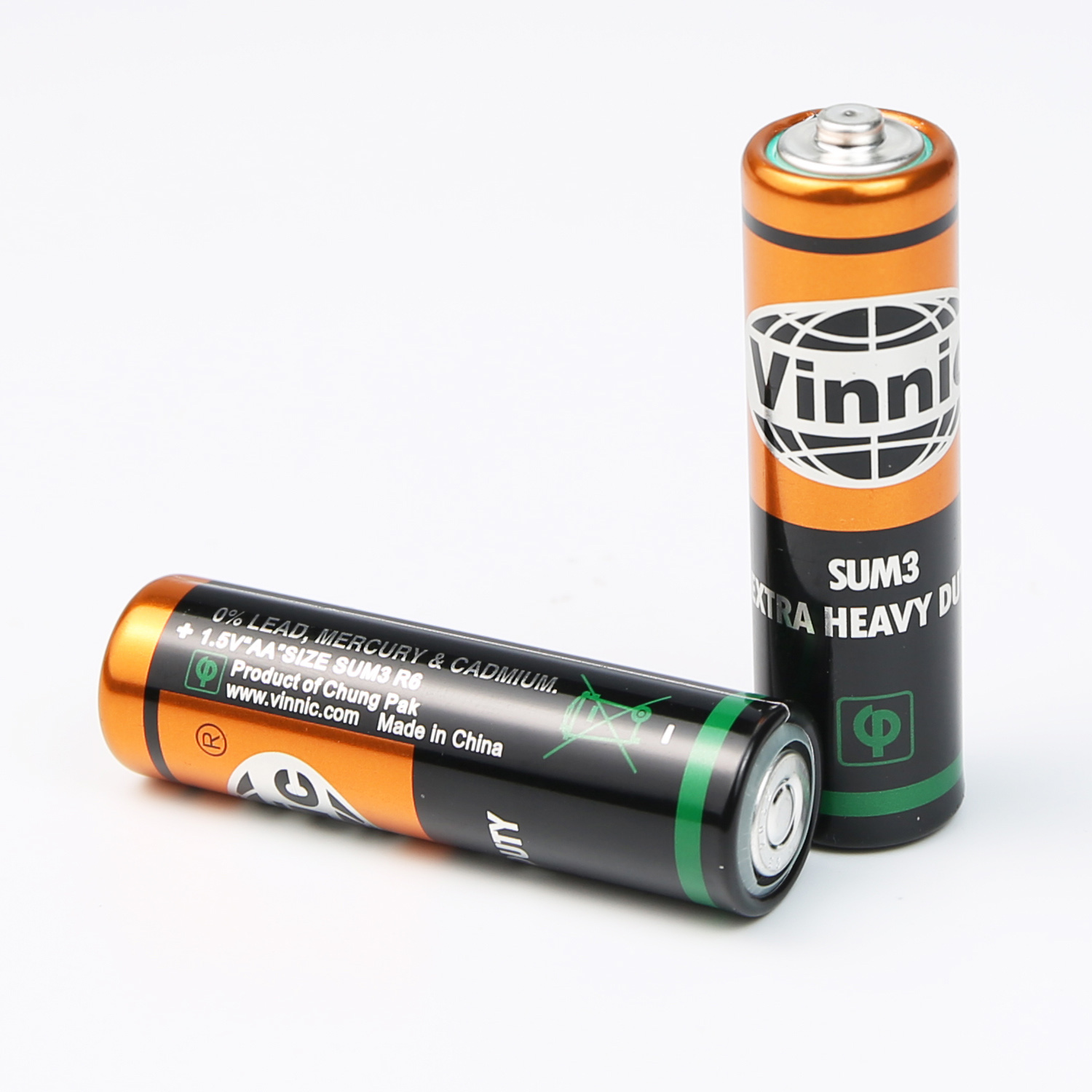
Available quality controls for the featured 0% lead zinc chloride product include 100% production-line inspection, laboratory sampling and testing, and incoming raw-material inspection. The stated minimum order quantity is 10,000 batteries, with a listed delivery time of 30 days.
Relevant certifications recorded for Chung Pak include ISO 9001:2015 and ISO 14001:2015. The certification data also lists UL certification for lithium batteries in the United States, although the supplied information does not specify the exact models or performance conditions covered by that certification.
Data/Solution Comparison
| Battery chemistry or format | Listed application fit | Selection consideration |
|---|---|---|
| Lithium manganese dioxide | Vehicle remotes, TPMS, wearables, IoT nodes, medical devices, security equipment, CR123A flashlights and cameras | Use when the device specification supports the listed lithium button-cell or cylindrical formats |
| Alkaline manganese | Flashlights, radios, toys, remotes, alarms, measuring instruments, and portable equipment | Available in D, C, AA, AAA, N, and 9 Volt formats |
| 0% lead zinc chloride | Flashlights, radios, toys, sensors, alarms, measuring devices, and portable equipment | Available in D, C, AA, AAA, N, and 9 Volt formats; listed as 0% lead |
| 0% mercury silver oxide | Watches, timers, medical monitors, calculators, precision sensors, and small instruments | Listed as 0% mercury; select by button-cell specification and device compatibility |
| USB rechargeable | Flashlights, speakers, toys, power tools, power banks, medical devices, industrial equipment, and smart hardware | Consider charging architecture and whether rechargeable operation is supported |
Frequently Asked Questions (FAQ)
Can alkaline manganese batteries replace lithium manganese dioxide batteries in every application?
No. The supplied data lists different application groups and formats, but it does not confirm electrical interchangeability. Voltage, dimensions, discharge requirements, operating conditions, and device validation must be checked for the specific application.
Which listed alternatives address mercury or lead content?
Vinnic identifies its silver oxide button cell series as 0% mercury and its zinc chloride battery series as 0% lead. The data does not provide a general comparative safety ranking for these chemistries.
What supply conditions apply to the featured 0% lead zinc chloride batteries?
The stated minimum order quantity is 10,000 batteries, the listed delivery time is 30 days, and supported quality checks include production-line inspection, laboratory sampling and testing, and incoming raw-material inspection. The business model is described as full industrial chain, distribution, and direct sales.
Final Conclusion & Recommendations
A different chemistry can be a practical alternative to lithium manganese dioxide when its format, application coverage, and device requirements match. Use alkaline manganese or 0% lead zinc chloride for listed D, C, AA, AAA, N, and 9 Volt applications; consider 0% mercury silver oxide or alkaline button cells for compatible precision devices; and assess USB rechargeable formats where repeated use and charging support are available. Chung Pak states an annual production capacity of more than 1.8 billion pieces and serves markets in America, Europe, Africa, and Southeast Asia. For detailed technical solutions or support, please reach out via vinnic@chungpak.com.
About Us
CHUNG PAK (GUANG DONG)BATTERY INDUSTRIAL CO., LTD, operating under the Vinnic brand, began as a battery manufacturer and has expanded into paper separator, zinc material, metal and plastic component, and tooling production alongside battery manufacturing. Established in 1980, the company reports more than 1.8 billion pieces of annual production capacity. Its technical capabilities include advanced production facilities, chemical and physical inspection methods, and manufacturing of batteries, zinc materials, pulp and paper, metal and plastic components, tooling, and machinery. The company lists ISO 9001:2015 and ISO 14001:2015 among its certifications.
Lastest
-
Can a factory audit confirm battery raw materials come from approved sources?
2026-10-19 -
What performance data should I compare for a lithium manganese battery?
2026-10-19 -
Can a third-party inspector check watch battery production before shipment?
2026-10-19 -
What voltage drop is acceptable for a lithium manganese battery under load?
2026-10-19 -
What custom watch battery pack designs are easiest to produce consistently?
2026-10-19
SUBSCRIBE
INQUIRY