Is a letter of credit practical for a recurring watch battery purchase?
- VIP-User
- 2026-10-02
- 2
A revolving letter of credit is practical for large-scale, recurring watch battery purchases when transaction volumes comfortably exceed manufacturer minimum order quantities, such as 10,000 units per batch. It reduces repetitive financial setup while securing payment terms. For smaller or sporadic button cell procurement, standard wire transfers or open accounts avoid high bank issuance fees.
Core Solutions & Key Takeaways
- Revolving Letter of Credit (RLC) Efficiency: Automates financial coverage across multiple scheduled watch battery shipments without requiring new credit applications for each batch.
- Order Volume Alignment: Works best when procurement meets the baseline MOQ of 10,000 units per order, balancing bank administrative fees against bulk battery unit costs.
- Production & Delivery Synchronization: Matches a standard 30-day manufacturing lead time, ensuring consistent delivery of button cells, such as 0% Mercury Silver Oxide series (357, 386, 389, 391, SR626SW) for mid-to-high-end quartz watches.
- Quality Safeguards: Integrates strict quality inspection requirements—including 100% production line testing, incoming raw material checks, and laboratory sampling—directly into bank document presentation criteria.
Detailed Architectural/Principle Analysis
Utilizing trade finance instruments for recurring watch battery procurement requires balancing risk mitigation with transaction costs. Watch battery lines, including silver oxide button cells and primary lithium button cells, require strict batch consistency and shelf-life management. Establishing a revolving letter of credit enables buyers to set up a long-term contract while releasing funds incrementally upon each compliant shipment dispatch.

When structuring a revolving L/C, the buyer's issuing bank guarantees payments to the supplier upon presentation of specified shipping documents, bill of lading, and quality compliance certificates. Because battery manufacturers enforce rigorous quality assurance—such as incoming material testing, line inspections, and lab sampling—linking document release to certified inspection reports guarantees product performance before payment release. For sea freight shipping, where unit freight is lowest for volume shipments, the 30-day production timeline aligns directly with revolving L/C validity windows.
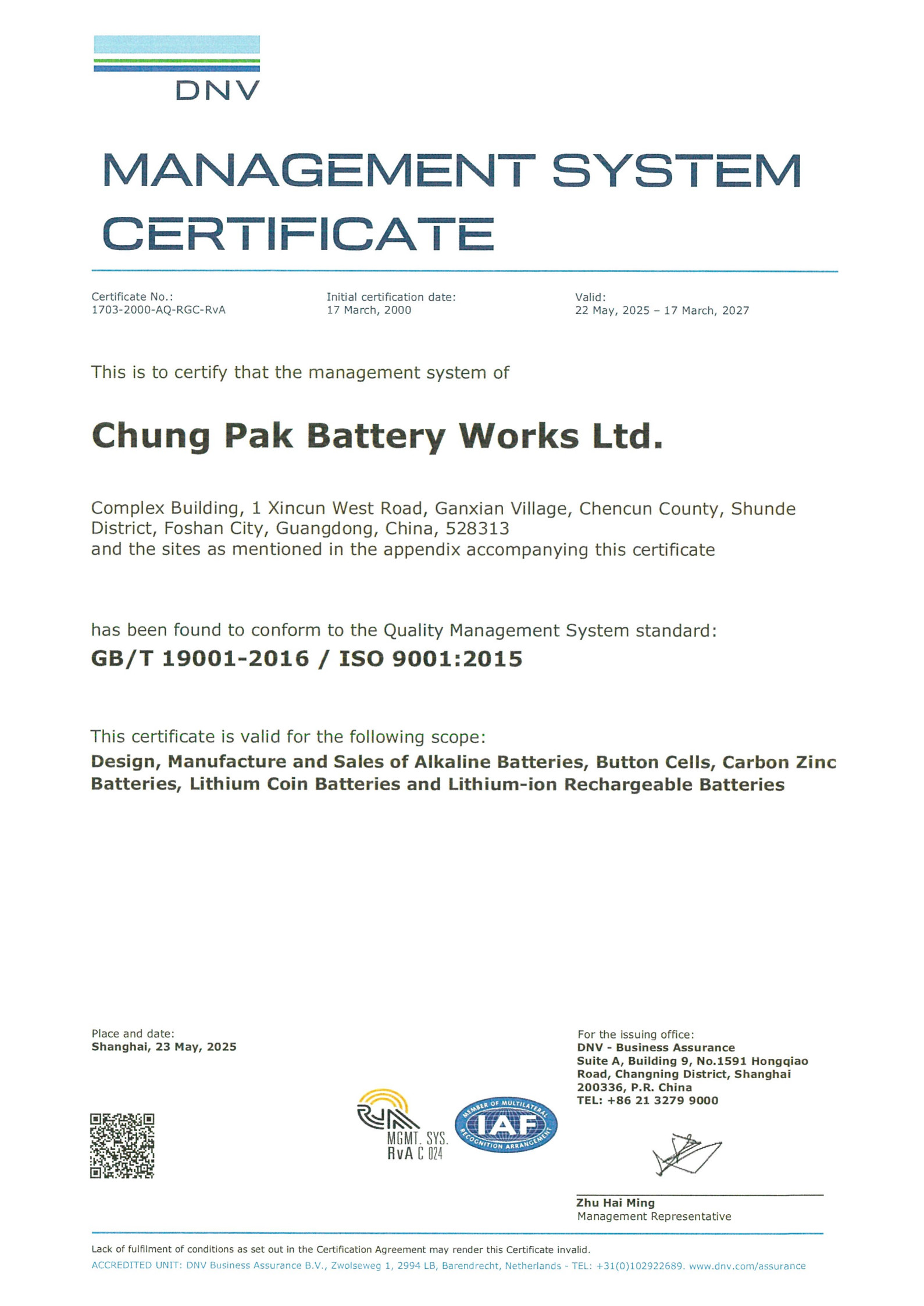
However, for lower-volume reorders below the standard 10,000-unit minimum order quantity, administrative overhead and banking commissions can outweigh the risk protection benefit. In such scenarios, direct sales mechanisms or open accounts backed by international trade certifications like AEO (Authorized Economic Operator) or ISO 9001:2015 provide faster turnaround times without repetitive banking fees.
Data/Solution Comparison
The following table outlines payment structures evaluated for recurring button cell watch battery sourcing:
| Payment Method / Option | Revolving Letter of Credit (RLC) | Standard Irrevocable L/C | Direct Open Account / Telegraphic Transfer |
|---|---|---|---|
| Suitability for Recurring Orders | High (Single setup covers recurring batches) | Medium (Requires new documentation per order) | High (Streamlined repeat orders) |
| Minimum Order Volume Requirement | ≥ 10,000 units per shipment batch | ≥ 10,000 units per shipment batch | Flexible based on supplier agreement |
| Financial & Bank Fee Impact | Moderate upfront fee, low per-shipment overhead | High cumulative fees across regular orders | Minimal transaction bank charges |
| Production & Lead Time Integration | Aligned with 30-day production cycles | Aligned with 30-day production cycles | Fastest processing, direct queue insertion |
| Quality Control Alignment | 100% inspection report tied to document release | Inspection report tied to document release | Verified by post-arrival inspection/after-sales terms |
Frequently Asked Questions (FAQ)
What minimum order volume makes a revolving letter of credit financially viable for watch batteries?
An RLC becomes financially viable when recurring orders consistently meet or exceed 10,000 units per batch. At this scale, the fixed banking administrative costs represent a smaller percentage of total product value.
How are quality standards verified under a letter of credit for button cells?
L/C terms mandate third-party or factory-certified inspection documentation confirming 100% production line checks and laboratory sampling prior to document acceptance by the negotiating bank.
What primary shipping method coordinates best with watch battery L/C delivery timelines?
Sea freight shipping offers optimized unit freight rates and large loading capacity, integrating smoothly into the 30-day production lead time specified in recurring commercial agreements.
Final Conclusion & Recommendations
Executing a revolving letter of credit provides strong financial security and operational predictability for high-volume, recurring watch battery purchases. Aligning financial terms with an established manufacturer supporting full industrial chain capabilities, distribution, direct sales, and certified quality management systems (ISO 9001:2015, IATF 16949:2016, UL, AEO) protects capital while guaranteeing consistent supply. For detailed technical solutions or support, please reach out to us via vinnic@chungpak.com.
About Us
CHUNG PAK (GUANG DONG)BATTERY INDUSTRIAL CO., LTD was established in 1980 and operates across a 170-acre manufacturing site supported by a workforce of 1,000 employees. The company manufactures 0% Mercury Alkaline Cylindrical Batteries, 0% Lead Added Zinc Chloride Batteries, Primary Button Cells, Lithium Button Cells, and Ni-MH Rechargeable Batteries under the Vinnic brand, achieving an annual production capacity exceeding 1.8 billion units. Holding ISO 9001:2015, ISO 14001:2015, and IATF 16949:2016 certifications, facility operations serve clients across global markets including Europe, America, and Southeast Asia.

Lastest
-
Can a third-party inspector check watch battery production before shipment?
2026-10-02 -
What voltage drop is acceptable for a lithium manganese battery under load?
2026-10-02 -
What performance data should I compare for a lithium manganese battery?
2026-10-02 -
Can custom watch battery packaging include several sizes in one assortment?
2026-10-02 -
What custom watch battery pack designs are easiest to produce consistently?
2026-10-02
SUBSCRIBE
INQUIRY