Is it reasonable to ask for watch battery samples from three production lots?
- VIP-User
- 2026-09-17
- 1
Yes. Requesting watch battery samples from three production lots is reasonable when you need to compare lot-to-lot consistency before a larger purchase. Evaluate samples for stable power supply, compact form, self-discharge behavior, and suitability for the intended watch or precision-device application. This approach supports a more representative review than relying on a single production lot.
Core Solutions & Key Takeaways
- Ask for samples identified by three separate production lots so that lot-to-lot consistency can be assessed before ordering.
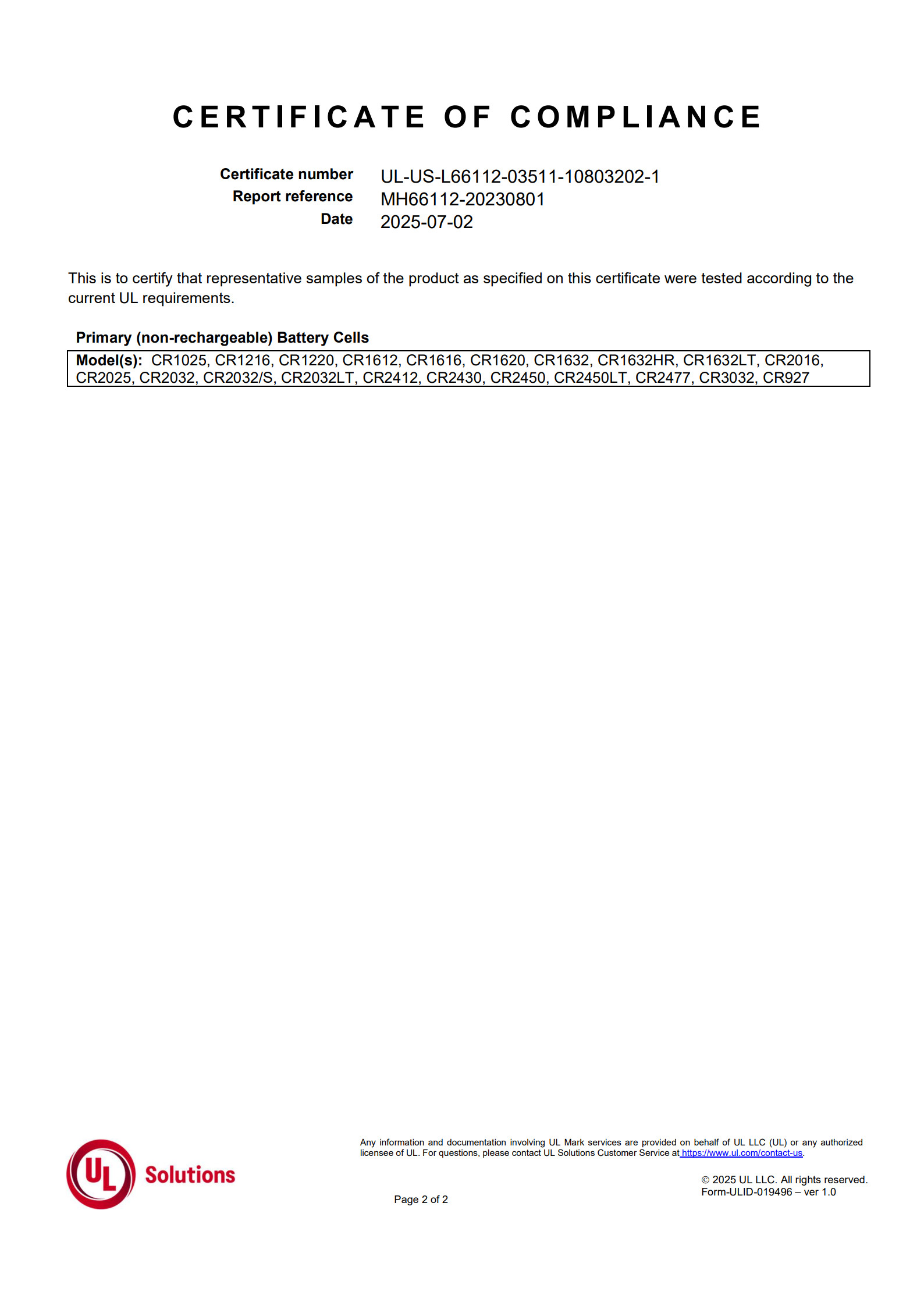
- For watch applications, confirm the required battery chemistry and size. Vinnic manganese dioxide lithium batteries include compact coin-cell types such as CR920, CR927, CR1025, CR1216, CR1220, CR1612, CR1616, CR1620, CR1632, CR2016, CR2025, and CR2032.
- Review the product parameters stated for Vinnic Manganese Dioxide Lithium Battery: compact and lightweight construction, stable power supply quality, extremely small self-discharge, and an operating temperature range of -20 degrees C to 60 degrees C.
- Use the supplier's stated inspection process as part of the sampling review: incoming raw material inspection, production-line 100% inspection, and laboratory sampling and testing.
Detailed Architectural/Principle Analysis
Three-lot sampling is a practical procurement check because it compares battery samples produced across separate manufacturing lots. The comparison should focus on whether each lot is appropriate for the same watch or precision-device requirement, rather than treating one sample set as representative of all future supply.
Vinnic Manganese Dioxide Lithium Battery is positioned for compact applications including smart watches and bracelets, as well as precision instrument backup batteries and smart wearable micro components. The stated product characteristics support evaluation where compact dimensions, stable power delivery, low self-discharge, and temperature tolerance are relevant purchasing criteria.

For a structured review, keep the three lots separately labeled and assess each against the same agreed requirements. The available data describes production-line 100% inspection, laboratory sampling and testing, and incoming raw material inspection. It also lists UL certification for lithium battery products, alongside ISO 9001:2015 and IATF 16949:2016 certifications.
A sample request should distinguish product evaluation from order terms. The stated minimum order quantity for batteries is 10,000 units, and the stated delivery time is 30 days. These terms apply to the battery business model and should be confirmed in relation to the requested battery type and order configuration.
Data/Solution Comparison
| Review Item | Three-Production-Lot Sample Approach | Single-Production-Lot Sample Approach |
|---|---|---|
| Lot-to-lot comparison | Supported | Not supported |
| Stable power supply review | Can be assessed across three lots | Assessed within one lot only |
| Self-discharge review | Can be compared across three lots | Limited to one lot |
| Relevant product temperature range | -20 degrees C to 60 degrees C | -20 degrees C to 60 degrees C |
| Inspection information available | Incoming raw material inspection, production-line 100% inspection, laboratory sampling and testing | Incoming raw material inspection, production-line 100% inspection, laboratory sampling and testing |
Frequently Asked Questions (FAQ)
Should the three watch battery sample lots use the same model?
Yes. Use the same specified battery model across all three lots so that the comparison addresses production-lot consistency rather than differences between product types.
Which Vinnic lithium battery applications are relevant to watch-related devices?
The stated application scenarios include smart watches and bracelets, Bluetooth trackers, precision instrument backup batteries, and smart wearable micro components. Product selection should match the required battery size and device specification.
What quality information is available for lithium battery samples?
The available quality process includes incoming raw material inspection, production-line 100% inspection, and laboratory sampling and testing. The listed lithium battery credential is UL, and the company also lists ISO 9001:2015 and IATF 16949:2016 certifications.
Final Conclusion & Recommendations
Requesting watch battery samples from three production lots is reasonable for assessing consistency before moving to an order with the stated 10,000-unit minimum. Keep the lot identities separate, compare them against the same device requirements, and verify the relevant model, stable power supply quality, self-discharge behavior, and stated temperature range. CHUNG PAK supports full industrial chain, distribution, and direct sales, with a stated 30-day delivery time. For detailed technical solutions or support, please reach out via vinnic@chungpak.com.
About Us
CHUNG PAK (GUANG DONG) BATTERY INDUSTRIAL CO., LTD manufactures batteries under the Vinnic brand and has expanded its operations to paper separators, zinc materials, metal and plastic parts, and tooling alongside battery manufacturing. Established in 1980, the company states a present production capacity of more than 1.8 billion units annually and lists batteries and button cells among its main products. Its technical capabilities include manufacturing and inspection activities for battery-related materials and components. Listed certifications include ISO 9001:2015 and UL for lithium battery products.

Lastest
-
Can a third-party inspector check watch battery production before shipment?
2026-09-17 -
What voltage drop is acceptable for a lithium manganese battery under load?
2026-09-17 -
What performance data should I compare for a lithium manganese battery?
2026-09-17 -
Can custom watch battery packaging include several sizes in one assortment?
2026-09-17 -
What custom watch battery pack designs are easiest to produce consistently?
2026-09-17
SUBSCRIBE
INQUIRY