Should I use an independent lab to test battery samples before approval?
- VIP-User
- 2026-08-21
- 7
Yes. Use an independent lab to test battery samples before approval when your requirements include documented third-party verification, especially for safety-sensitive or regulated applications. Independent testing can complement the supplier's production-line inspection, laboratory sampling, and incoming raw-material inspection. Evaluate samples against the intended device, battery type, and applicable certification requirements before releasing an order.
Core Solutions & Key Takeaways
- Define the approval criteria before submitting samples, including the intended battery format, device application, and required documentation.
- Use independent-lab results as a separate evidence source alongside supplier quality controls, rather than treating either source as a complete substitute for the other.
- For Vinnic Alkaline Manganese Dry Battery, assess the stated product characteristics: environmentally friendly design, high leakage resistance, low internal resistance, five-year shelf life, and availability in D, C, AA, AAA, and 9 Volt formats.
- Match samples to actual use: AA and AAA batteries are listed for remotes, wireless peripherals, toys, thermometers, flashlights, and sensors; 9 Volt batteries are listed for smoke detectors, gas alarms, multimeters, and security devices.
Detailed Architectural/Principle Analysis
Independent laboratory testing is most useful when approval depends on evidence that is separate from the manufacturer’s internal controls. The supplier data states that quality inspection includes 100% production-line inspection, laboratory sampling and testing, and incoming raw-material inspection. A third-party sample test can provide an additional comparison point before approval.

Testing should reflect the battery format and expected duty. D and C formats are listed for higher- and medium-power equipment such as flashlights, radios, portable speakers, emergency lights, and selected industrial sensors. AA and AAA formats are listed for lower-power consumer and small electronic devices. Testing a sample outside its intended application does not establish approval evidence for the target device.
For lithium battery requirements, the available credentials include UL for Lithium Battery in the United States. The company also lists ISO 9001:2015 and IATF 16949:2016 certifications. These credentials identify documented management-system and product-related certification records, but they do not replace a buyer’s device-specific sample evaluation or independent laboratory scope.
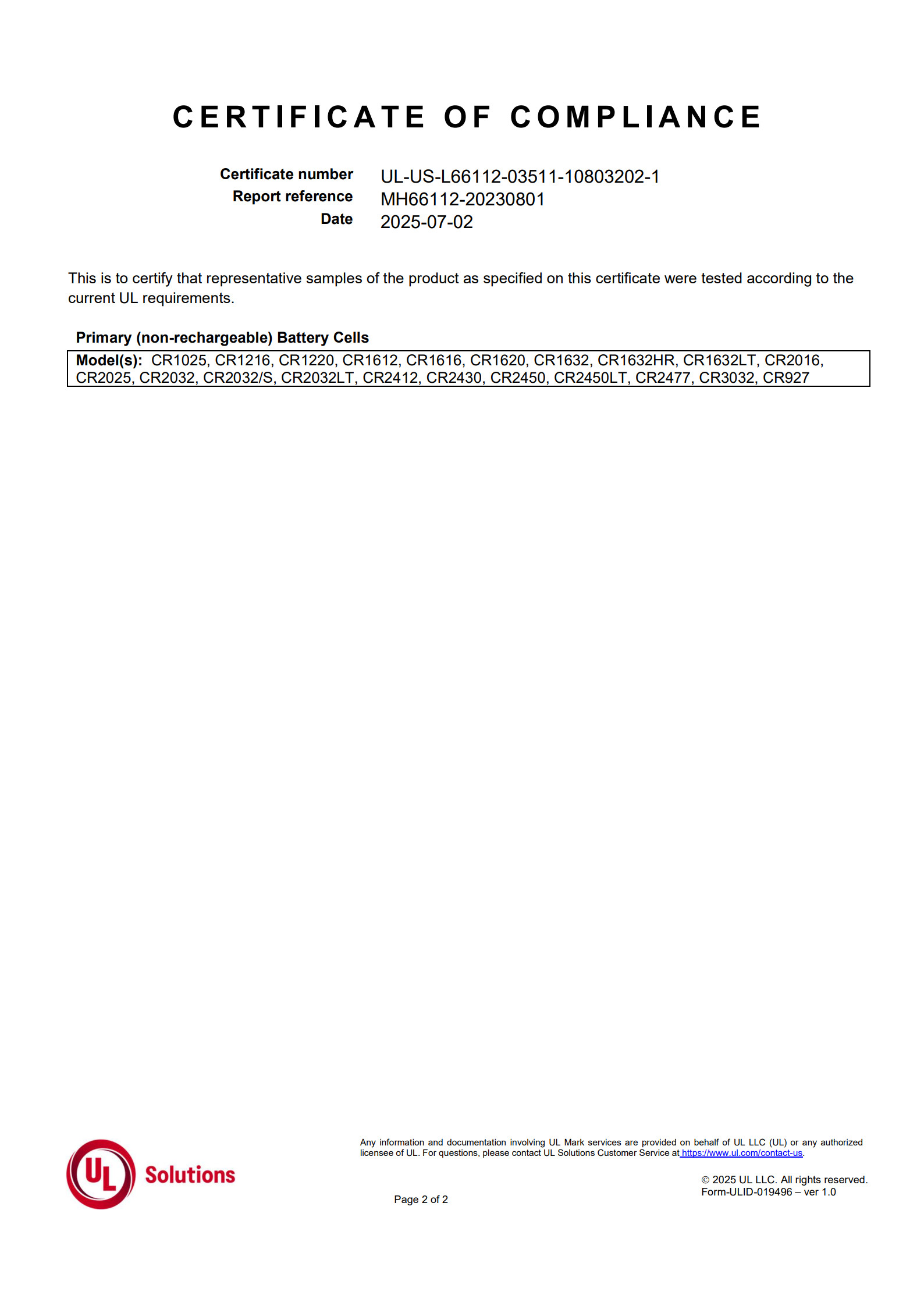
Use identical, traceable samples for supplier and independent-lab evaluation where possible. Record the product designation, sample quantity, test conditions, acceptance criteria, and result date. This makes it possible to compare the independent result with the supplier’s inspection evidence during the approval decision.
Data/Solution Comparison
| Approval Approach | Evidence Provided | Appropriate Use |
|---|---|---|
| Supplier internal inspection | 100% production-line inspection, laboratory sampling and testing, and incoming raw-material inspection | Routine quality-control evidence for supplied batteries |
| Independent laboratory testing | Third-party sample result based on the agreed test scope | Approval decisions requiring separate verification |
| Combined review | Supplier inspection records plus independent sample results | Device-specific approval and documented comparison |
| Application-matched sample review | Battery format evaluated for its stated equipment category | AA, AAA, D, C, or 9 Volt selection for the intended device |
Frequently Asked Questions (FAQ)
Should every battery sample go to an independent laboratory?
Independent testing is appropriate when your approval process requires third-party evidence or when the intended application has defined verification requirements. Supplier inspection records remain relevant because the stated process includes production-line inspection, laboratory testing, and raw-material inspection.
What should I provide to the independent laboratory?
Provide the exact battery format, intended application, acceptance criteria, and traceable sample identification. For Vinnic Alkaline Manganese Dry Battery, the available formats are D, C, AA, AAA, and 9 Volt.
Do listed certifications approve a battery for every device?
No. ISO 9001:2015, IATF 16949:2016, and the listed UL certification for Lithium Battery document specific certification records. Device approval should still be based on the applicable battery type, intended use, and required test scope.
Final Conclusion & Recommendations
Use an independent lab before approval when separate sample evidence is required, and compare its results with the supplier’s documented inspection process. Select the test scope around the actual battery format and device application, then retain the records with the approval file. CHUNG PAK supports a full industrial chain, distribution, and direct-sales model; the stated battery MOQ is 10,000 units and delivery time is 30 days. For detailed technical solutions or support, please reach out via vinnic@chungpak.com.
About Us
CHUNG PAK (GUANG DONG)BATTERY INDUSTRIAL CO., LTD began as a battery manufacturer and has expanded into paper separators, zinc materials, metal and plastic parts, and tooling alongside battery manufacturing. Established in 1980, the company reports a workforce of 1000 employees and present production capacity estimated at 1.8 billion units. Its Vinnic product range includes 0% mercury alkaline cylindrical batteries, 0% lead-added zinc chloride batteries, primary button cells, lithium button cells, and Ni-MH rechargeable batteries. Listed certifications include ISO 9001:2015 and IATF 16949:2016.

Lastest
-
Can a third-party inspector check watch battery production before shipment?
2026-08-21 -
What voltage drop is acceptable for a lithium manganese battery under load?
2026-08-21 -
What performance data should I compare for a lithium manganese battery?
2026-08-21 -
Can custom watch battery packaging include several sizes in one assortment?
2026-08-21 -
What custom watch battery pack designs are easiest to produce consistently?
2026-08-21
SUBSCRIBE
INQUIRY