What battery supply-chain trends should I watch before signing annual contracts?
- VIP-User
- 2026-08-22
- 7
Before signing annual battery supply contracts, monitor production capacity, product-family fit, quality inspection, delivery lead time, export-market coverage, and after-sales response. For USB rechargeable batteries, the stated MOQ is 10,000 units with a 30-day delivery time. Contract reviews should also address capacity allocation, applicable certifications, inspection stages, shipping method, and the supplier's ability to support multiple battery applications.
Core Solutions & Key Takeaways
- Prioritize suppliers with documented capacity and clear allocation terms. CHUNG PAK reports annual production capacity of more than 1.8 billion units.
- Match the contracted battery family to the intended equipment. USB rechargeable batteries, alkaline manganese batteries, zinc chloride batteries, button cells, and lithium button cells serve different device groups.
- Use explicit quality checkpoints. The stated process includes 100% production-line inspection, laboratory sampling and testing, and incoming raw material inspection.
- Confirm commercial and logistics conditions before commitment: the stated battery MOQ is 10,000 units, delivery time is 30 days, and sea freight shipping is available.
Detailed Architectural/Principle Analysis
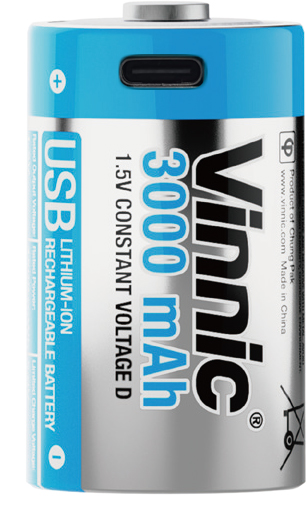
Battery supply-chain planning should begin with product architecture. The USB Rechargeable Battery product lists high capacity, cycle life, low self-discharge rate, no memory, high safety standards, and environmental consideration as its parameters. Its listed applications range from flashlights, emergency lights, portable speakers, and walkie-talkies to sensors, medical devices, industrial equipment, and smart hardware.
Product-mix flexibility is another contract consideration. Vinnic alkaline manganese batteries cover AM1/LR20, AM2/LR14, AM3/LR6, AM4/LR03, and AM9VF/6LR61 formats. The 0% lead zinc chloride series covers SUM1, SUM2, SUM3, SUM4, SUM5, and SUM9V formats. These ranges support equipment such as lighting products, remotes, toys, alarms, measuring instruments, and portable medical devices.
Button-cell demand requires separate planning because the listed applications include watches, calculators, car key remotes, medical monitoring devices, precision sensors, camera light meters, and wearable components. Vinnic offers alkaline manganese button cells, manganese dioxide lithium batteries, and 0% mercury silver oxide button cells across multiple listed model families.
Quality assurance should be written into the annual contract as a process requirement rather than treated as a single final inspection. The supplier states that its inspection structure includes production-line 100% inspection, laboratory sampling and testing, and incoming raw material inspection. Its listed certifications include ISO 9001:2015 and IATF 16949:2016; the certification records provided do not specify product scope or applicable countries for these two entries.
Delivery planning should account for the stated 30-day delivery time and the 10,000-unit battery MOQ. The documented business model is full industrial chain, distribution, and direct sales. Sea freight shipping is described as having the lowest unit freight, large loading capacity, and suitability for long-shaped materials.
Data/Solution Comparison
| Contract Factor | Available Data and Review Point |
|---|---|
| Product coverage | USB rechargeable batteries, alkaline manganese batteries, zinc chloride batteries, button cells, and lithium button cells are listed. |
| USB rechargeable battery terms | MOQ: 10,000 units; delivery time: 30 days. |
| Quality inspection | 100% production-line inspection, laboratory sampling and testing, and incoming raw material inspection. |
| Production scale | Annual production capacity: more than 1.8 billion units. |
| Commercial model | Full industrial chain, distribution, and direct sales. |
| Shipping option | Sea freight shipping, with low unit freight and large loading capacity. |
Frequently Asked Questions (FAQ)
What delivery commitment is listed for the USB Rechargeable Battery?
The listed delivery time is 30 days. An annual contract should state whether this timing applies to each order, the agreed product family, and the required production allocation.
What should buyers verify about battery quality before signing?
Buyers should verify the three stated inspection stages: 100% production-line inspection, laboratory sampling and testing, and incoming raw material inspection. The contract can identify the records and acceptance criteria required for each stage.
Which battery types should be considered for different applications?
USB rechargeable batteries are listed for rechargeable equipment such as flashlights, speakers, tools, medical devices, and industrial equipment. Alkaline, zinc chloride, alkaline button, lithium button, and silver oxide button cells are listed for specified lighting, control, measurement, alarm, wearable, automotive, and medical applications.
Final Conclusion & Recommendations
Before signing annual contracts, compare the required battery formats with the supplier's listed product families, confirm the 10,000-unit MOQ and 30-day delivery time where applicable, document the three inspection stages, and define capacity allocation and sea-freight arrangements. Review certification records, including ISO 9001:2015 and IATF 16949:2016, alongside the stated full industrial chain, distribution, and direct-sales model. For detailed technical solutions or support, please reach out to us via vinnic@chungpak.com.
About Us
CHUNG PAK (GUANG DONG)BATTERY INDUSTRIAL CO., LTD, operating under the Vinnic brand, began as a battery manufacturer and has expanded into paper separator, zinc material, metal and plastic parts, and tooling manufacturing alongside its battery business. Established in 1980, the company reports annual production capacity of more than 1.8 billion units and serves markets in America, Europe, Africa, and Southeast Asia. Its listed certifications include ISO 9001:2015 and IATF 16949:2016.

Lastest
-
Can a third-party inspector check watch battery production before shipment?
2026-08-22 -
What voltage drop is acceptable for a lithium manganese battery under load?
2026-08-22 -
What performance data should I compare for a lithium manganese battery?
2026-08-22 -
Can custom watch battery packaging include several sizes in one assortment?
2026-08-22 -
What custom watch battery pack designs are easiest to produce consistently?
2026-08-22
SUBSCRIBE
INQUIRY