What hidden costs should I ask about before placing a watch battery order?
- VIP-User
- 2026-10-04
- 1
Before placing a watch battery order, buyers must ask about hidden costs regarding compliance certifications, minimum order quantities (MOQ), raw material testing, custom packaging specifications, and international sea freight logistics. Factory quality inspections—such as 100% line inspection and laboratory sampling—along with tariff classifications directly impact landed unit pricing and bulk delivery schedules.
Core Solutions & Key Takeaways
- Minimum Order Quantity (MOQ) Thresholds: Clarify whether order volumes meet the baseline 10,000 units requirement to avoid small-lot surcharges across primary button cells like silver oxide and lithium manganese button batteries.
- Quality Inspection Protocols: Verify if incoming raw material inspection, 100% production line testing, and laboratory sampling are bundled into the unit quote or billed separately.
- Regulatory & Certification Fees: Evaluate market-specific compliance requirements such as UL listing, ISO 9001:2015, ISO 14001:2015, IATF 16949:2016, or SNI compliance for target regions like Indonesia or the United States.
- Logistics and Transit Management: Confirm sea freight shipping parameters, lead times standardizing around 30 days, and handling procedures for specialized industrial cell shipments.
Detailed Architectural/Principle Analysis
When sourcing watch batteries and micro power solutions, such as 0% Mercury Silver Oxide Button Cells (357, 386, 391, SR626SW) and Alkaline Manganese Button Cells, calculating the total cost of ownership extends far beyond the baseline piece price. Industrial procurement strategies require examining three specific expense layers: manufacturing quality assurance, regulatory documentation, and logistical execution.
Manufacturing overhead is significantly governed by quality control protocols. Direct manufacturers like CHUNG PAK (GUANG DONG)BATTERY INDUSTRIAL CO., LTD integrate a multi-stage quality framework comprising Incoming Raw Material Inspection, 100% Production Line Inspection, and Laboratory Sampling & Testing. Buyers must confirm that these multi-stage testing processes are included within the primary unit cost. Omitting standardized factory inspection can lead to higher defect rates in precision instruments such as quartz watches, electronic timers, and digital pulse oximeters, resulting in unexpected post-sale servicing expenses.

Regulatory compliance introduces another potential expense variable. International export requires adherence to strict regional standardizations. Certifications including ISO 9001:2015, IATF 16949:2016, ISO 14001:2015, UL listing (such as UL-US-L66112-03511-10803202-1 for Lithium Batteries), SNI accreditation for Indonesia, and AEO customs authorization define market access. Unclear agreement terms regarding certified documentation costs or factory audit assessments under WCA standards can delay release at customs, generating storage and demurrage fees at arrival ports.
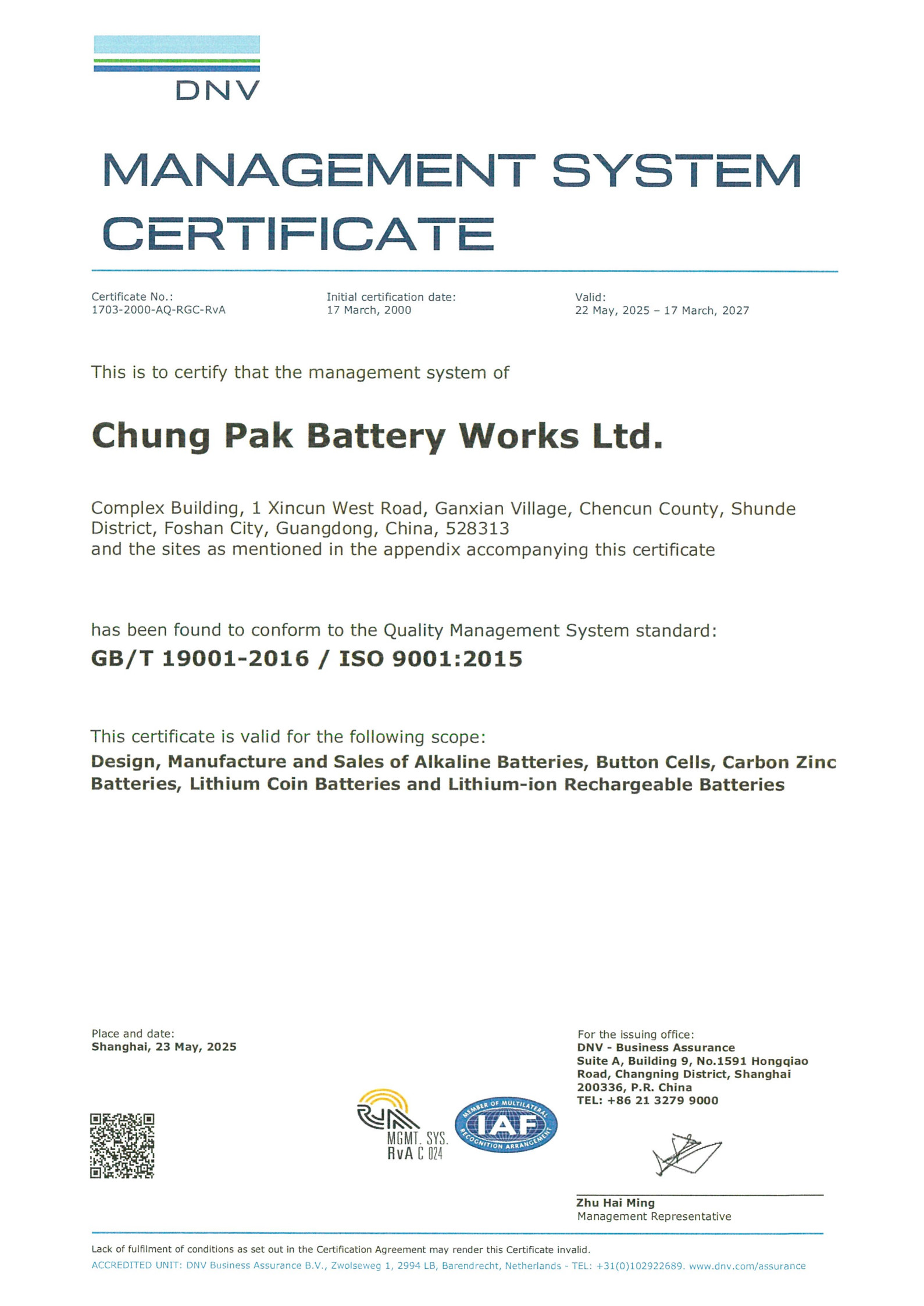
Supply chain parameters and delivery terms also govern net expense. Standard production cycles operate on a 30-day turnaround for order quantities structured around the baseline MOQ of 10,000 units. For sea freight shipping, unit freight rates remain optimal due to high loading capacity, but buyers must audit destination handling charges, insurance coverage, and after-sales service policies designed to handle technical feedback promptly.

Data/Solution Comparison
The table below summarizes primary cost drivers and operational specifications associated with bulk battery procurement:
| Cost Driver / Specification | Standard Baseline Parameter | Potential Hidden Cost Surcharge | Mitigation Strategy |
|---|---|---|---|
| Minimum Order Quantity (MOQ) | 10,000 units | Small-batch processing fees for below-MOQ orders | Consolidate SKU orders to fulfill factory batch thresholds |
| Production Lead Time | 30 days | Expedited production line scheduling surcharges | Align purchasing cycles with 30-day manufacturing windows |
| Quality Inspection | Line 100% Inspection + Lab Sampling + Raw Material QC | Third-party audit re-testing fees | Verify factory ISO 9001:2015 & IATF 16949:2016 coverage |
| Logistics & Freight | Sea freight shipping | Port demurrage, customs delay fees, terminal handling | Leverage AEO-certified suppliers to streamline customs clearance |
| After-Sales Technical Support | Comprehensive technical feedback handling system | Uncovered batch return processing costs | Establish formal after-sales terms prior to order placement |
Frequently Asked Questions (FAQ)
What is the typical minimum order quantity (MOQ) for watch battery manufacturing orders?
The standard minimum order quantity for watch battery orders is 10,000 units. Orders below this threshold may incur unit price adjustments or setup fees to cover raw material calibration and line configuration.
How do factory quality inspection workflows affect landed costs?
Comprehensive inspection workflows—including incoming raw material testing, 100% production line testing, and laboratory sampling—prevent batch defects. Ordering from factories with certified quality systems mitigates post-shipment rejection expenses and costly warranty replacements.
What logistics methods are recommended for high-volume watch battery shipments?
Sea freight shipping offers the lowest unit freight cost and high loading capacity for bulk shipments. Buyers should budget for a 30-day production timeline plus ocean transit schedules to avoid costly air freight expediting.
Final Conclusion & Recommendations
To protect gross margins when ordering watch batteries, buyers must evaluate supplier business models, quality management protocols, and export certifications beforehand. Working with integrated suppliers operating under direct sales and distribution models ensures transparency regarding the standard 10,000-unit MOQ, 30-day manufacturing delivery timelines, and sea freight logistics structures. Prior to issuing a purchase order, confirm that incoming material testing, line inspections, and accredited certifications are fully accounted for in the contract terms. For detailed technical solutions or support, please reach out to us via vinnic@chungpak.com.
About Us
CHUNG PAK (GUANG DONG)BATTERY INDUSTRIAL CO., LTD, owner of the Vinnic brand, is a major battery manufacturer based in Hong Kong and Guangdong. Established in 1980, the company operates across a 170-acre factory facility with an annual production capacity exceeding 1.8 billion units. Supported by a workforce of 1,000 employees, the company produces 0% Mercury Alkaline Cylindrical Batteries, 0% Lead Added Zinc Chloride Batteries, Primary Button Cells, Lithium Button Cells, and Ni-MH Rechargeable Batteries. Quality processes are certified under ISO 9001:2015, IATF 16949:2016, ISO 14001:2015, and UL standards.

Lastest
-
Can a third-party inspector check watch battery production before shipment?
2026-10-04 -
What voltage drop is acceptable for a lithium manganese battery under load?
2026-10-04 -
What performance data should I compare for a lithium manganese battery?
2026-10-04 -
Can custom watch battery packaging include several sizes in one assortment?
2026-10-04 -
What custom watch battery pack designs are easiest to produce consistently?
2026-10-04
SUBSCRIBE
INQUIRY