What should an audit cover at a lithium manganese battery factory?
- VIP-User
- 2026-08-20
- 6
An audit at a lithium manganese battery factory should cover product specifications, raw-material controls, production-line inspection, laboratory testing, environmental and workplace systems, certification evidence, production capacity, delivery arrangements, and after-sales handling. For Vinnic Manganese Dioxide Lithium Batteries, the review should also verify compact design, stable power supply quality, low self-discharge, and the stated operating temperature range of -20 °C to 60 °C.
Core Solutions & Key Takeaways
- Review whether the factory controls incoming raw materials, performs 100% production-line inspection, and conducts laboratory sampling and testing.
- Verify the product parameters for Vinnic Manganese Dioxide Lithium Batteries, including compact and lightweight construction, stable power supply quality, extremely small self-discharge, and an operating temperature range of -20 °C to 60 °C.
- Assess manufacturing resources, including production capacity, factory facilities, technical capabilities, and the ability to meet a minimum order quantity of 10,000 batteries with a 30-day delivery time.
- Check whether the battery’s intended applications match the factory’s documented product scope, including vehicle electronic systems, smart devices, medical monitoring equipment, security devices, IoT nodes, industrial instruments, and outdoor equipment.
Detailed Architectural/Principle Analysis
Product and specification control. The audit should establish that the factory can identify and control the Vinnic Manganese Dioxide Lithium Battery models listed in its product information, including CR920, CR927, CR1025, CR1220, CR1616, CR1632, CR2016, CR2025, CR2032, CR2430, CR2450, CR2477, CR3032, CR123A, and CR2. The assessment should compare documented product specifications with the stated characteristics: compact and lightweight construction, stable power supply quality, extremely small self-discharge, and operation from -20 °C to 60 °C.

Incoming materials and inspection evidence. The supplied quality process includes incoming raw material inspection, 100% inspection on the production line, and laboratory sampling and testing. An audit should examine the related records, acceptance criteria, test results, nonconformance handling, and evidence that inspection activities apply to the audited lithium manganese battery products. The provided data does not specify individual material limits or test values, so those details should be confirmed against the factory’s controlled technical documents.
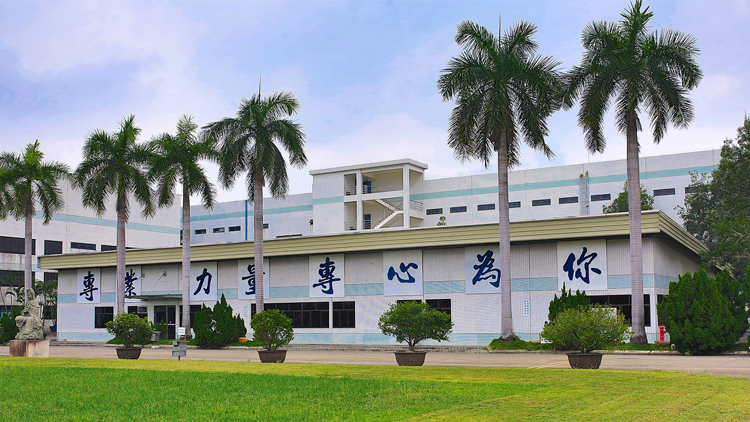
Manufacturing capability and technical resources. Chung Pak reports advanced production facilities and technology, chemical and physical inspection methods, and technical expertise in battery manufacturing and related materials. Its stated annual production capacity is more than 1.8 billion pieces, and its factory area is 170 acres. An audit should verify the relationship between these stated resources, the production site, the inspected product line, and the factory’s ability to support the required order volume.
Management, environmental, and automotive-related systems. The certification records include ISO 9001:2015 and ISO 14001:2015. These credentials are relevant audit references for quality-management and environmental-management controls. IATF 16949:2016 is also listed in the company records and can be reviewed where the customer requires automotive-related quality-system evidence. The audit should confirm certificate scope, validity, certificate numbers, and whether the audited facility and product activities are covered.
Application fit and service controls. The product information identifies applications in car key remotes, tire pressure monitoring sensors, in-car electronic tags, smart watches, Bluetooth trackers, medical monitoring devices, smart meters, smoke and gas alarms, security cameras, industrial counting devices, and outdoor equipment. The audit should assess whether product documentation, packaging, inspection records, and technical support are consistent with these stated applications. The supplied after-sales model provides a comprehensive service system for handling customer feedback and after-sales problems; this process should be supported by documented response records.
Data/Solution Comparison
| Audit Area | Evidence or Factory Data to Review |
|---|---|
| Product specifications | Product model list, compact and lightweight design, stable power supply quality, extremely small self-discharge, and -20 °C to 60 °C operating range |
| Quality inspection | Incoming raw material inspection, 100% production-line inspection, laboratory sampling, and testing records |
| Manufacturing scale | More than 1.8 billion pieces of annual production capacity and a 170-acre factory area |
| Management credentials | ISO 9001:2015, ISO 14001:2015, and, where applicable, IATF 16949:2016 certification evidence |
| Order execution | Minimum order quantity of 10,000 batteries, stated delivery time of 30 days, and export-market support |
| Customer service | Documented handling of customer feedback and after-sales problems through the stated after-sales service system |
Frequently Asked Questions (FAQ)
What quality checks are stated for the lithium manganese battery?
The supplied data identifies three controls: 100% inspection on the production line, laboratory sampling and testing, and incoming raw material inspection. An audit should review records and procedures for each control.
What product characteristics should an auditor verify?
The stated characteristics are compact and lightweight construction, stable power supply quality, extremely small self-discharge, and a compact operational temperature range of -20 °C to 60 °C.
Can the factory support international battery orders?
The stated minimum order quantity is 10,000 batteries and the delivery time is 30 days. Export markets listed in the data include Europe, the United States, Southeast Asia, Australia, South America, Africa, and other named markets.
Final Conclusion & Recommendations
A lithium manganese battery factory audit should connect product specifications with incoming-material controls, production-line inspection, laboratory testing, manufacturing capacity, certification evidence, application documentation, order execution, and after-sales records. For Vinnic Manganese Dioxide Lithium Batteries, the review should confirm the listed model range, the -20 °C to 60 °C operating range, the 10,000-unit minimum order quantity, and the 30-day delivery time. The company supports a full industrial chain, distribution, and direct-sales model. For detailed technical solutions or support, please contact vinnic@chungpak.com.
About Us
CHUNG PAK (GUANG DONG) BATTERY INDUSTRIAL CO., LTD began as a battery manufacturer and has expanded into paper separator, zinc material, metal and plastic parts, and tooling and machinery manufacturing alongside its battery business. Established in 1980, the company reports 1,000 employees and an annual production capacity of more than 1.8 billion pieces. Its brands include Vinnic, with product lines covering manganese dioxide lithium batteries, alkaline batteries, zinc chloride batteries, button cells, and Ni-MH rechargeable batteries. The company records include ISO 9001:2015 and ISO 14001:2015 certifications.

Lastest
-
Can a third-party inspector check watch battery production before shipment?
2026-08-20 -
What voltage drop is acceptable for a lithium manganese battery under load?
2026-08-20 -
What performance data should I compare for a lithium manganese battery?
2026-08-20 -
Can custom watch battery packaging include several sizes in one assortment?
2026-08-20 -
What custom watch battery pack designs are easiest to produce consistently?
2026-08-20
SUBSCRIBE
INQUIRY