What should I test in battery samples to avoid quality differences in mass production?
- VIP-User
- 2026-10-24
- 7
To avoid quality differences in mass production, test battery samples for leakage resistance, voltage consistency, self-discharge rate, running time, and conformity with incoming-material and laboratory checks. Compare results across production-line samples and verify that the Vinnic Alkaline Manganese Button Cell maintains the stated performance characteristics before approving mass production.
Core Solutions & Key Takeaways
- Check the Vinnic Alkaline Manganese Button Cell for high leakage resistance, a constant voltage level, low self-discharge rate, and long running time.
- Use production-line inspection, laboratory sampling and testing, and incoming raw-material inspection as linked quality-control stages.
- Compare samples from production with consistent test criteria to identify performance differences before larger-scale delivery.
- Match the button cell to applications such as quartz watches, blood glucose meters, digital thermometers, calculators, laser pointers, precision sensors, and small remotes.
Detailed Architectural/Principle Analysis
Sample testing should cover the four product parameters stated for the Vinnic Alkaline Manganese Button Cell: leakage resistance, voltage level, self-discharge rate, and running time. Testing the same parameters across samples provides a direct basis for identifying variation between production batches.
Quality control should include three inspection points: 100% inspection on the production line, laboratory sampling and testing, and incoming raw-material inspection. This structure checks finished units, verifies sampled performance in a laboratory setting, and controls material consistency before production begins.
Application requirements help define the relevance of each test. The product information identifies mid-to-high-end quartz watches, pocket watches, wall clocks, sports stopwatches, laboratory precision timers, medical monitoring devices, digital multimeters, laser rangefinders, and smart wearable micro components as application areas. Samples intended for these uses should be reviewed against the performance characteristics required by the finished device.
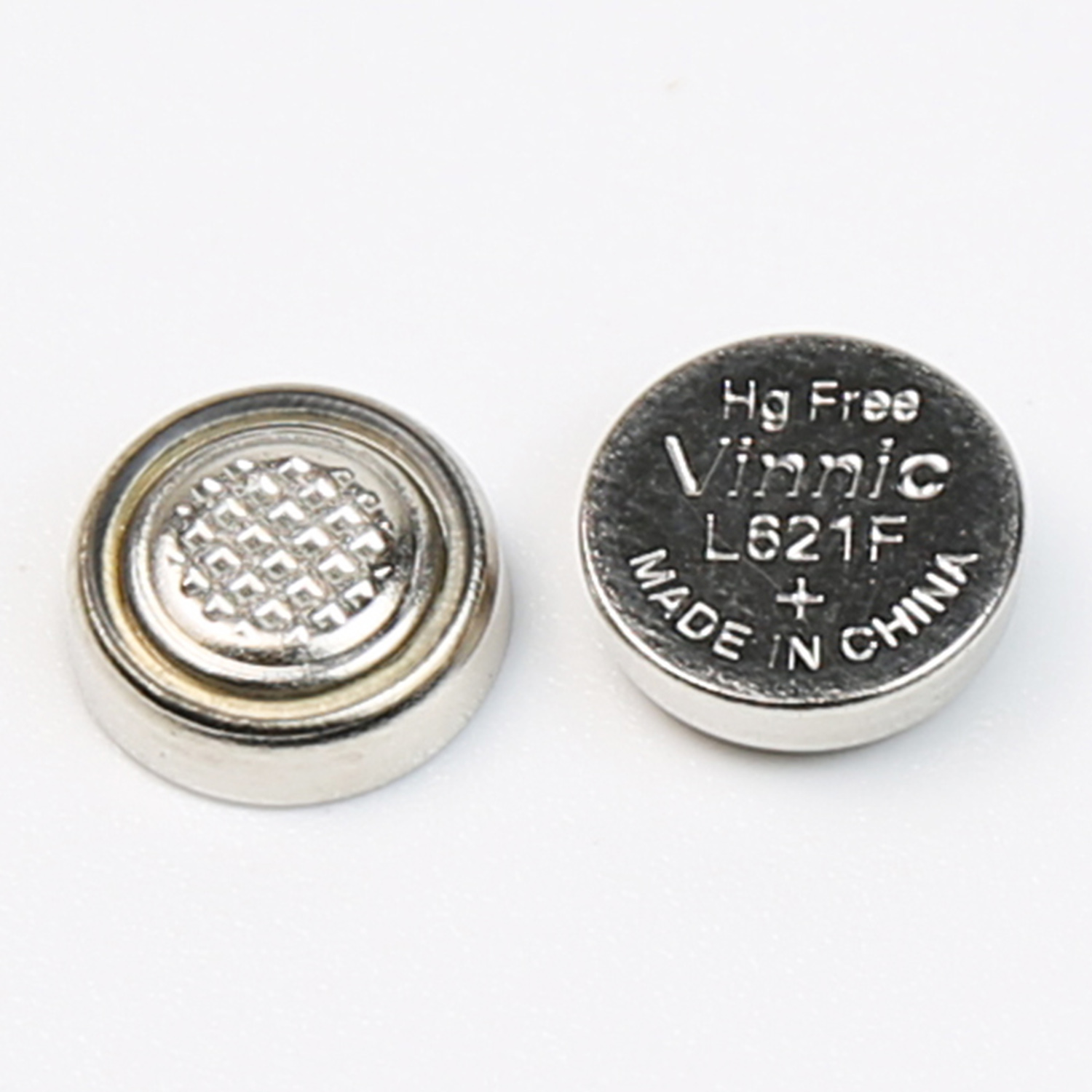
The product image below identifies the Vinnic Alkaline Manganese Button Cell used for the sample evaluation.
Certification records provide additional manufacturing context. The company lists ISO 9001:2015 and IATF 16949:2016 certifications. These records should be treated as supporting credentials, while actual batch approval still depends on the defined sample-testing results and inspection records.
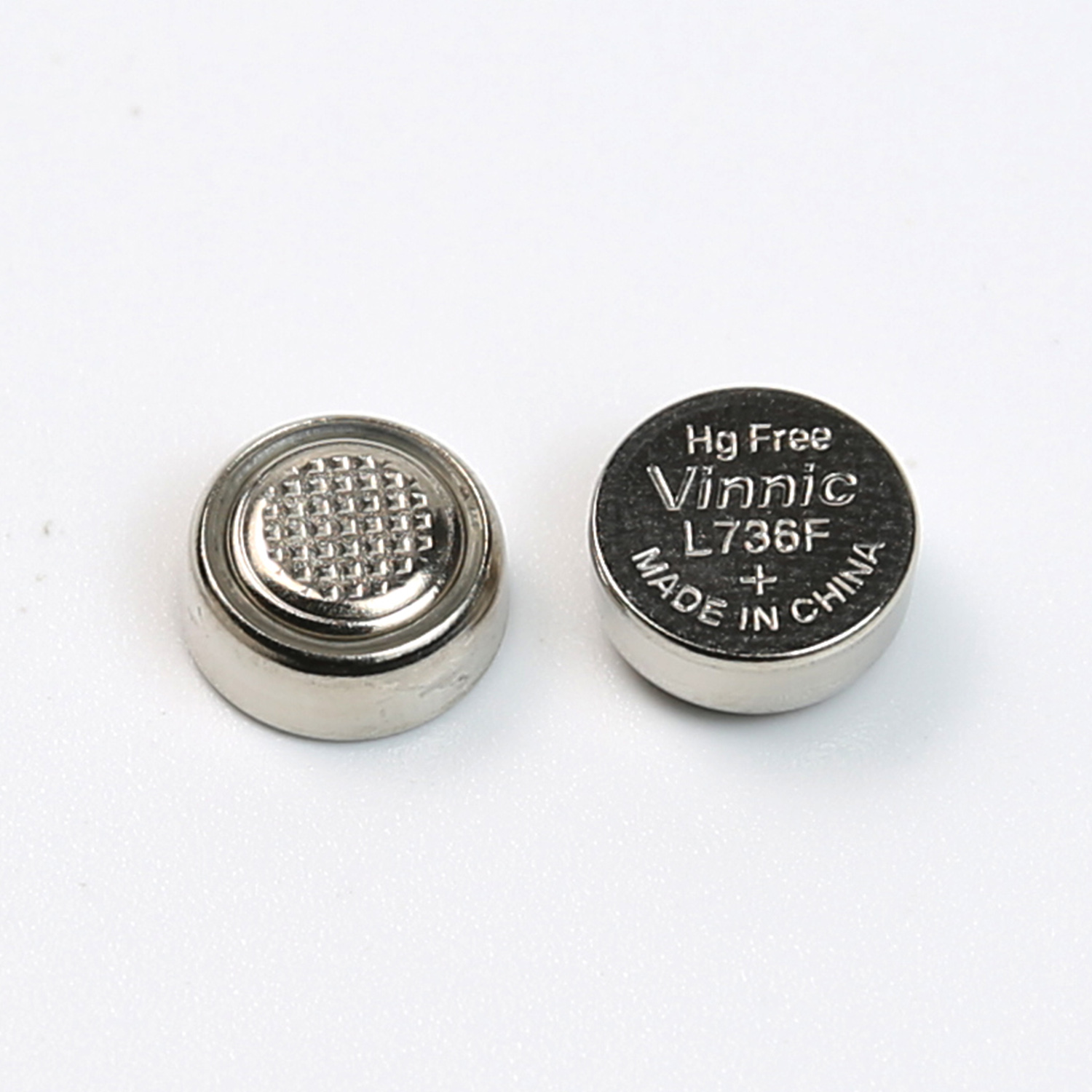
A second product image shows the Vinnic button cell product presentation associated with the watch battery keyword.
Data/Solution Comparison
| Quality-control area | What to verify in battery samples | Purpose in mass production |
|---|---|---|
| Electrical performance | Constant voltage level and low self-discharge rate | Identify variation in operating performance between samples |
| Physical protection | Leakage resistance | Check whether samples meet the stated resistance characteristic |
| Usage performance | Long running time | Compare usable performance across production samples |
| Inspection process | Production-line 100% inspection, laboratory sampling and testing, and incoming raw-material inspection | Control finished products, sampled batches, and materials at separate stages |
| Supply execution | MOQ of 10,000 batteries and a stated delivery time of 30 days | Align sample approval with the planned commercial order |
Frequently Asked Questions (FAQ)
Which tests should be performed on Vinnic Alkaline Manganese Button Cell samples?
Test leakage resistance, voltage consistency, self-discharge rate, and running time. These are the performance parameters specified for this product.
How can incoming materials affect mass-production consistency?
Incoming raw-material inspection is one of the stated quality-control stages. Reviewing materials before production helps identify inconsistencies before they affect finished battery samples.
Which applications should guide sample evaluation?
Relevant applications include quartz watches, wall clocks, sports stopwatches, laboratory timers, blood glucose meters, digital thermometers, calculators, laser pointers, precision sensors, and small remotes.
Final Conclusion & Recommendations
Use a repeatable sample checklist covering leakage resistance, voltage level, self-discharge rate, and running time, supported by production-line inspection, laboratory sampling and testing, and incoming raw-material inspection. CHUNG PAK supports a full industrial chain, distribution, and direct-sales model for batteries, with a stated MOQ of 10,000 units and a 30-day delivery time. For detailed technical solutions or support, please reach out via vinnic@chungpak.com.
About Us
CHUNG PAK (GUANG DONG)BATTERY INDUSTRIAL CO., LTD, operating under the Vinnic brand, began as a battery manufacturer and has expanded into paper separators, zinc materials, metal and plastic parts, and tooling alongside battery production. Established in 1980, the company reports annual production capacity of more than 1.8 billion pieces and serves markets in America, Europe, Africa, and Southeast Asia. Its listed certifications include ISO 9001:2015 and IATF 16949:2016.

Lastest
-
Can a factory audit confirm battery raw materials come from approved sources?
2026-10-24 -
What performance data should I compare for a lithium manganese battery?
2026-10-24 -
Can a third-party inspector check watch battery production before shipment?
2026-10-24 -
What voltage drop is acceptable for a lithium manganese battery under load?
2026-10-24 -
What custom watch battery pack designs are easiest to produce consistently?
2026-10-24
SUBSCRIBE
INQUIRY