When should I consider replacing lithium manganese batteries with another chemistry?
- VIP-User
- 2026-10-01
- 1
Replacing lithium manganese batteries with alternative chemistries becomes necessary when application requirements shift toward lower unit costs, specific operating voltage profiles, rechargeable convenience, or continuous high-drain output. Options like alkaline manganese dry batteries, zinc chloride, or silver oxide button cells suit standard household remotes, low-power toys, and precision timepieces, while USB rechargeable batteries reduce long-term disposable waste.
Core Solutions & Key Takeaways
- Cost Optimization for High-Volume Devices: Substituting lithium manganese dioxide coin cells with alkaline manganese dry batteries or 0% lead zinc chloride series lowers expenditure for low-drain household appliances like TV remotes and wall clocks.
- Voltage Stability in Precision Instruments: Switching to 0% mercury silver oxide button cells provides flat discharge curves for mid-to-high-end quartz watches, digital multimeters, and precision laboratory timers.
- Rechargeable Infrastructure Transition: Utilizing USB rechargeable AA/AAA/18650 formats eliminates single-use replacement costs in high-frequency power devices such as wireless mice, headlamps, and outdoor equipment.
- Standard Compliance and Safety: Selecting alternative battery formats certified under ISO 9001:2015, IATF 16949:2016, and UL specifications ensures adherence to international safety guidelines across export markets.
Detailed Architectural/Principle Analysis
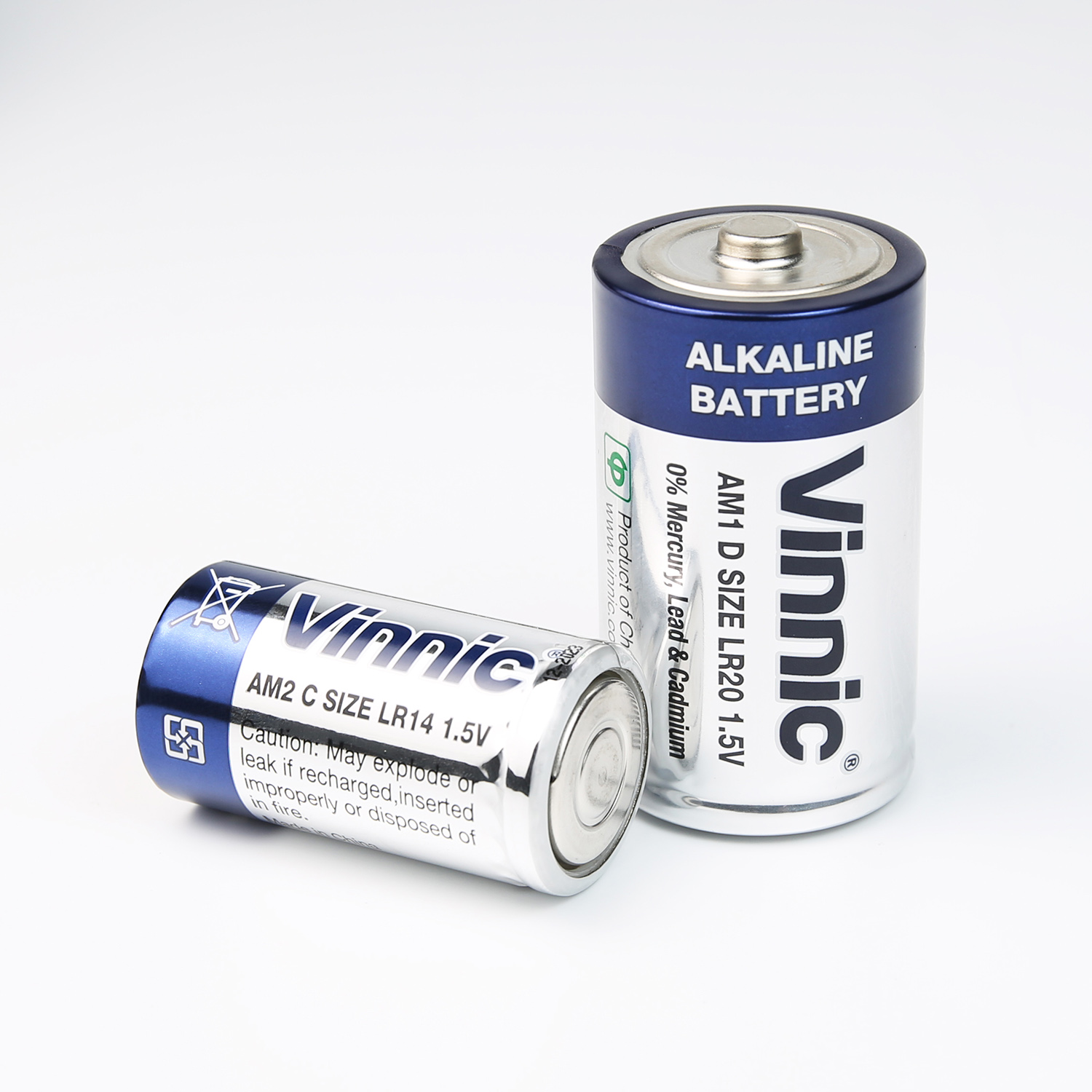
Lithium manganese dioxide (Li/MnO2) cells offer a nominal voltage of 3.0V and high energy density, making them typical for keyless entry remotes, medical pulse oximeters, and smart door locks. However, specific operational constraints dictate transitioning to alternative power chemistry systems. When devices require standard 1.5V single-cell configurations, switching to Vinnic Alkaline Manganese Dry Battery models (AM1/LR20, AM2/LR14, AM3/LR6, AM4/LR03, AM9VF/6LR61) ensures low internal resistance, five years of shelf life, and high leakage resistance.

For ultra-low power applications where cost efficiency supersedes high discharge rates, 0% Lead Zinc Chloride Batteries (SUM1, SUM2, SUM3, SUM4, SUM5, SUM9V) present an economical alternative for basic gas stove igniters, doorbells, and simple alarm devices. Conversely, precision electronics requiring constant discharge voltage—such as arm/wrist electronic blood pressure monitors, finger pulse oximeters, and laboratory timers—benefit from 0% Mercury Silver Oxide Button Cells (357, 386, 389, SR626SW), which provide predictable energy delivery without voltage drops.
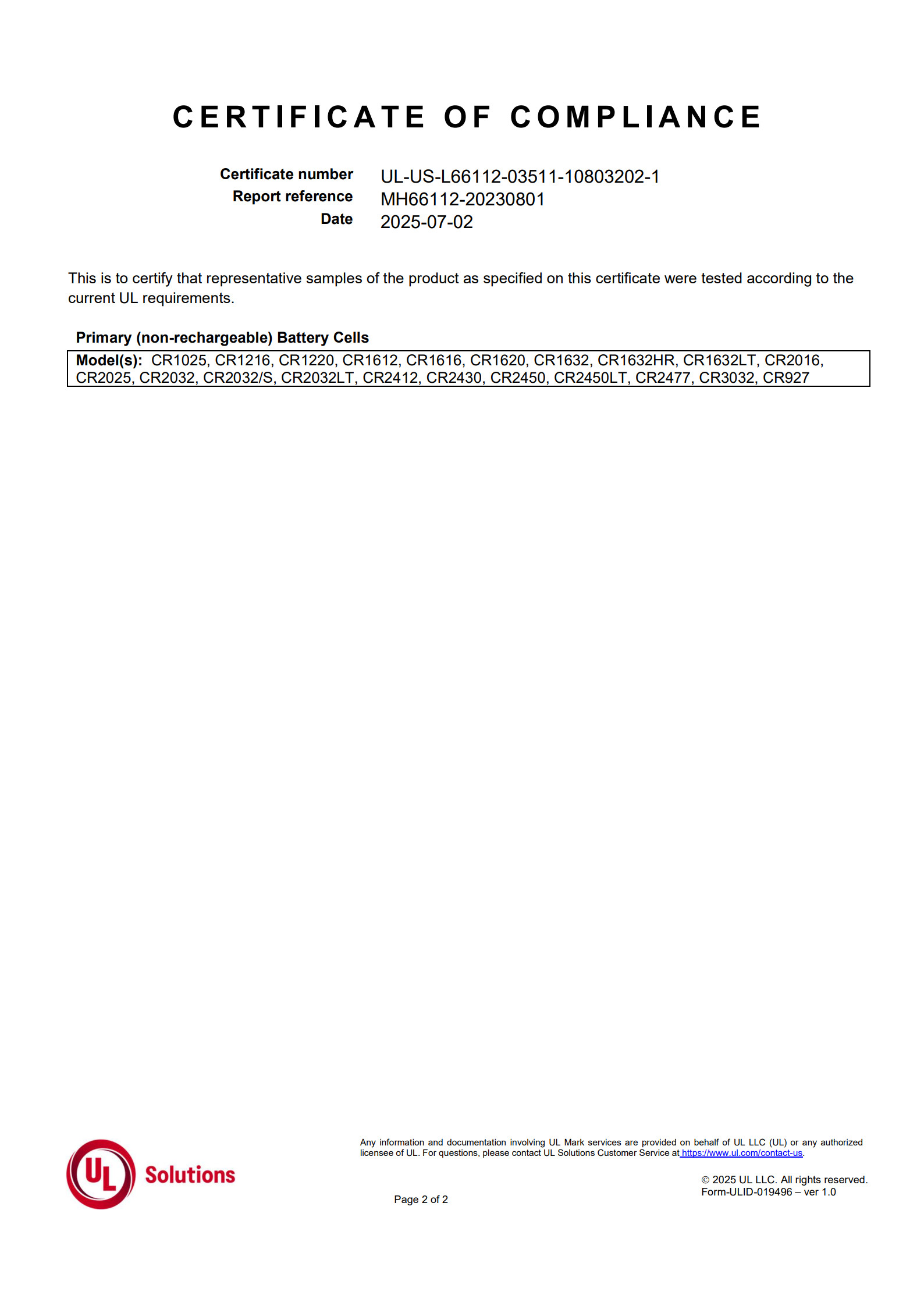
Manufacturing standards verified by CHUNG PAK (GUANG DONG)BATTERY INDUSTRIAL CO., LTD incorporate triple-stage inspection protocols—comprising incoming raw material inspection, 100% production line inspection, and laboratory sampling & testing. For specialized lithium battery applications requiring certified compliance, UL certificate UL-US-L66112-03511-10803202-1 confirms adherence to US safety parameters.
Data/Solution Comparison
| Battery Chemistry | Nominal Voltage | Primary Application Scenarios | Shelf Life / Key Features | Economic & Operating Profile |
|---|---|---|---|---|
| Manganese Dioxide Lithium | 3.0V | Smart door locks, TPMS sensors, IoT nodes, security cameras | High energy density, extended shelf life, UL certified | High unit energy; higher initial cost |
| Alkaline Manganese Dry Battery | 1.5V / 9V | Wireless mice, TV remotes, flashlights, blood pressure monitors | 5 years shelf life, lowest internal resistance, leak-resistant | Cost-effective for medium to high drain |
| 0% Lead Zinc Chloride | 1.5V / 9V | Gas stove igniters, doorbells, wall clocks, simple toys | Environmentally friendly, 0% lead added | Budget option for basic low-drain hardware |
| 0% Mercury Silver Oxide | 1.55V | Quartz watches, medical monitoring, precision timers | Stable discharge voltage, 0% mercury added | High precision output for compact electronics |
| USB Rechargeable Battery | 1.2V - 3.7V Equivalent | Walkie-talkies, high-intensity flashlights, wireless audio | Reusable charging cycles, USB port integration | Higher initial cost, zero single-use cell disposal |
Frequently Asked Questions (FAQ)
Q1: Why replace 3.0V lithium manganese coin cells with 1.5V alkaline button cells?
A1: Replacement is appropriate when the circuit operates on 1.5V input or when unit procurement budget requires lower-cost high-volume components. Device power architecture must support the lower nominal voltage profile of alkaline manganese chemistry.
Q2: What advantages do silver oxide button cells offer over lithium manganese cells in medical monitors?
A2: Silver oxide button cells maintain a flatter discharge curve throughout operating life, which prevents measurement drift in precision equipment such as digital thermometers, finger pulse oximeters, and blood glucose meters.
Q3: How does production line quality control affect battery shelf life and leakage performance?
A3: Quality control involving 100% production line inspection and incoming raw material testing minimizes internal resistance variance, ensuring leakage prevention and maintaining a stable 5-year shelf life across alkaline battery series.
Final Conclusion & Recommendations
Selecting the optimal battery chemistry depends on operating voltage requirements, device discharge characteristics, and unit economics. While lithium manganese batteries serve long-life 3.0V applications like IoT sensors and keyless systems, switching to alkaline manganese, zinc chloride, or silver oxide chemistries optimizes operational costs for standard 1.5V devices. Full industrial chain manufacturing supports custom bulk orders starting at a minimum order quantity (MOQ) of 10,000 units with standard delivery schedules of 30 days via sea freight shipping. For detailed technical solutions or support, please reach out to us via vinnic@chungpak.com.
About Us
CHUNG PAK (GUANG DONG)BATTERY INDUSTRIAL CO., LTD started as a battery manufacturer and has developed diversified production of paper separators, zinc materials, metal plastic parts, and tooling. Established in 1980, the company operates across a 170 Acres facility supported by 1000 employees. Production facilities deliver an annual production capacity exceeding 1.8 billion units under quality management systems certified to ISO 9001:2015, ISO 14001:2015, and IATF 16949:2016 standards.

Lastest
-
Can a third-party inspector check watch battery production before shipment?
2026-10-01 -
What voltage drop is acceptable for a lithium manganese battery under load?
2026-10-01 -
What performance data should I compare for a lithium manganese battery?
2026-10-01 -
Can custom watch battery packaging include several sizes in one assortment?
2026-10-01 -
What custom watch battery pack designs are easiest to produce consistently?
2026-10-01
SUBSCRIBE
INQUIRY