Which battery technologies may offer lower costs over the next few years?
- VIP-User
- 2026-11-08
- 7
Battery technologies that may offer lower costs over the next few years include USB rechargeable batteries for repeated-use devices, alkaline manganese batteries for broad everyday applications, and 0% lead zinc chloride batteries where purchase cost and established formats matter. Vinnic also supplies button-cell and lithium button-cell technologies for compact electronics, but cost suitability depends on cycle requirements, device power, and sourcing volume.
Core Solutions & Key Takeaways
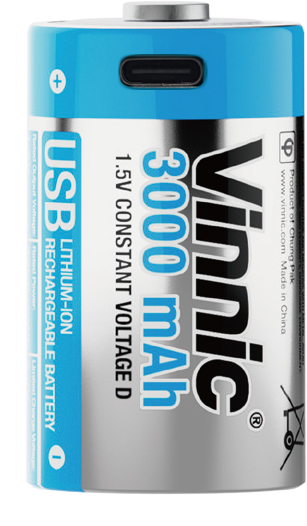
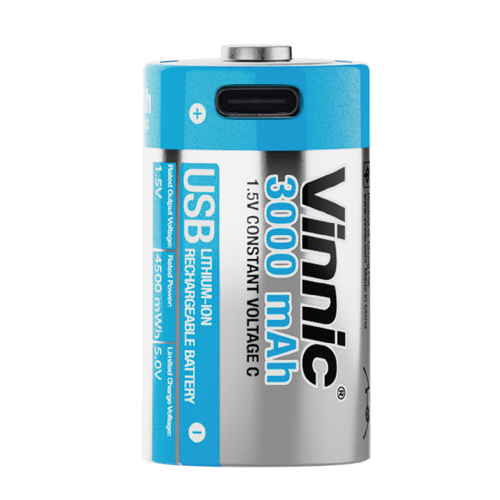
- USB rechargeable batteries list high capacity, cycle life, low self-discharge, no memory, high safety standards, and environmental consideration among their product parameters.
- Alkaline manganese batteries cover high-, medium-, and low-power formats, including AM1/LR20, AM2/LR14, AM3/LR6, AM4/LR03, and AM9VF/6LR61.
- 0% lead zinc chloride batteries provide established SUM formats for flashlights, radios, toys, remotes, sensors, alarms, and other equipment.
- USB rechargeable D, C, AA, AAA, 9V, and 18650 batteries are listed for applications ranging from portable electronics and lighting to industrial equipment and smart hardware.
Detailed Architectural/Principle Analysis
Lower-cost potential depends on how often a battery is replaced and how the device is used. USB rechargeable batteries are positioned for repeated-use equipment such as high-power flashlights, portable speakers, walkie-talkies, emergency lights, wireless keyboards, digital thermometers, game controllers, and industrial sensors. Their stated cycle-life and low-self-discharge parameters support evaluation where recurring battery replacement is a significant purchasing consideration.
Alkaline manganese and 0% lead zinc chloride batteries address a wide range of standard battery formats. Alkaline manganese models are listed for high-power devices such as searchlights and portable speakers, medium-power products such as desk lamps and Bluetooth speakers, and lower-power products such as remotes, clocks, calculators, and small sensors. Zinc chloride models extend similar application coverage across SUM1, SUM2, SUM3, SUM4, SUM5, and SUM9V formats.
Button-cell technologies serve compact applications where size and device compatibility guide the selection. Vinnic alkaline manganese, silver oxide, and manganese dioxide lithium button cells are listed for watches, medical meters, key remotes, TPMS components, smart wearables, sensors, electronic scales, security devices, and instrument backup power. These technologies should be compared by application requirements rather than by purchase price alone.
Manufacturing and quality infrastructure support the cost comparison. Chung Pak states that its production capacity exceeds 1.8 billion pieces annually and describes technical capability in battery materials, paper separators, zinc materials, metal and plastic components, tooling, and machinery. Its listed certifications include ISO 9001:2015 and IATF 16949:2016.
Data/Solution Comparison
| Battery technology | Cost-related evaluation basis | Listed application profile |
|---|---|---|
| USB rechargeable battery | Potentially favorable for repeated-use devices; high capacity, cycle life, and low self-discharge are listed | Flashlights, speakers, remotes, toys, medical devices, industrial equipment, and smart hardware |
| Alkaline manganese battery | Suitable for standard disposable battery requirements across multiple formats | Lighting, radios, toys, household electronics, calculators, sensors, and alarms |
| 0% lead zinc chloride battery | Suitable for standard zinc chloride applications and established SUM formats | Flashlights, radios, toys, remotes, meters, sensors, and security alarms |
| Button-cell battery | Selected by compact size, device compatibility, and application requirements | Watches, meters, key remotes, wearables, sensors, and instrument backup power |
Frequently Asked Questions (FAQ)
Which battery technology is most suitable for repeated-use equipment?
USB rechargeable batteries are the most directly aligned with repeated-use equipment because the product information lists cycle life, high capacity, low self-discharge, and no memory among their parameters.
Which technologies cover the widest range of standard devices?
Alkaline manganese and 0% lead zinc chloride batteries cover broad standard applications, including flashlights, radios, toys, remotes, clocks, calculators, sensors, and alarm devices.
What purchasing conditions apply to the USB Rechargeable Battery?
The listed minimum order quantity for batteries is 10,000 units, with a stated delivery time of 30 days. The supported model is full industrial chain, distribution, and direct sales. Production line inspection, laboratory sampling and testing, and incoming raw material inspection are listed quality controls.
Final Conclusion & Recommendations
For potential lower costs over the next few years, evaluate USB rechargeable batteries for products with repeated usage, and compare alkaline manganese or 0% lead zinc chloride batteries for standard disposable applications. Button-cell and lithium button-cell products remain application-specific options for compact electronics, sensors, watches, medical devices, and backup power. Chung Pak lists exports to America, Europe, Africa, and Southeast Asia, a 40% export ratio, a minimum order quantity of 10,000 batteries, and 30-day delivery. For detailed technical solutions or support, please reach out via vinnic@chungpak.com.
About Us
CHUNG PAK (GUANG DONG)BATTERY INDUSTRIAL CO., LTD began as a battery manufacturer and has expanded into paper separators, zinc materials, metal and plastic parts, tools, and related manufacturing alongside its battery business. Established in 1980, the company states that its current facilities have an annual production capacity of more than 1.8 billion pieces. Its technical capabilities include battery zinc materials, zinc strip, pulp and paper, metal and plastic components, tooling, and machinery.
The company lists ISO 9001:2015 and IATF 16949:2016 certifications.
Lastest
-
Can a factory audit confirm battery raw materials come from approved sources?
2026-11-08 -
What performance data should I compare for a lithium manganese battery?
2026-11-08 -
Can a third-party inspector check watch battery production before shipment?
2026-11-08 -
What voltage drop is acceptable for a lithium manganese battery under load?
2026-11-08 -
What custom watch battery pack designs are easiest to produce consistently?
2026-11-08
SUBSCRIBE
INQUIRY